

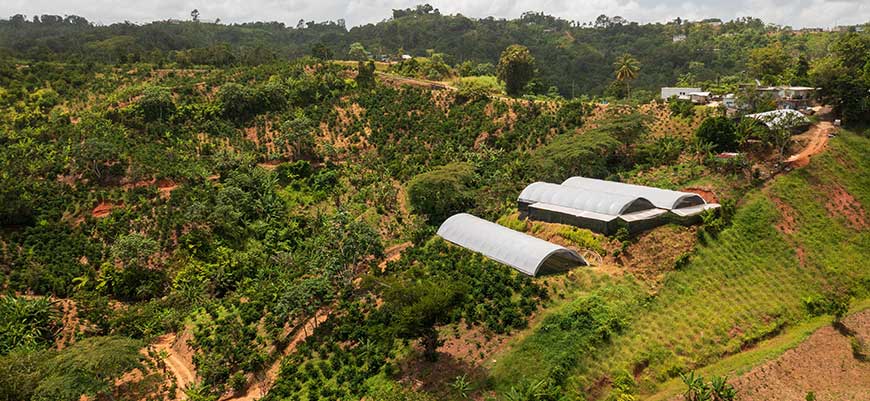
While the country imports $1.4 billion worth of food annually, local farmers possess untapped potential to dramatically increase production through strategic adoption of agricultural technology. The government's recent $60 million investment in cutting-edge farming equipment—including agricultural drones, tractors, and specialized harvesters—signals a new era where technology meets tradition to create a more sustainable, efficient, and profitable agricultural future.
The path forward isn't about abandoning proven farming methods, but enhancing them with smart tools that maximize yields, conserve resources, and build climate resilience. Here's how available agri-tech solutions can revolutionize farming practices across Jamaica.
1. Precision Agriculture and Satellite Monitoring
Gone are the days of guessing crop health or waiting for visible signs of stress. Satellite-based farm management systems now provide real-time insights that enable proactive intervention before problems escalate.
Key Technologies:
- Multispectral satellite imagery that monitors vegetation health and identifies stressed areas invisible to the naked eye
- Soil moisture sensors delivering continuous data on water levels across fields
- Weather prediction models integrated with farm data to optimize planting and harvesting schedules
- GPS-guided equipment ensuring precise seed placement and fertilizer application
For Jamaican farmers dealing with increasingly unpredictable weather patterns, precision agriculture transforms reactive crisis management into strategic planning. By detecting disease early, optimizing input usage, and reducing waste, farmers can increase yields by 20-30% while cutting costs.
2. Agricultural Drones: Eyes in the Sky
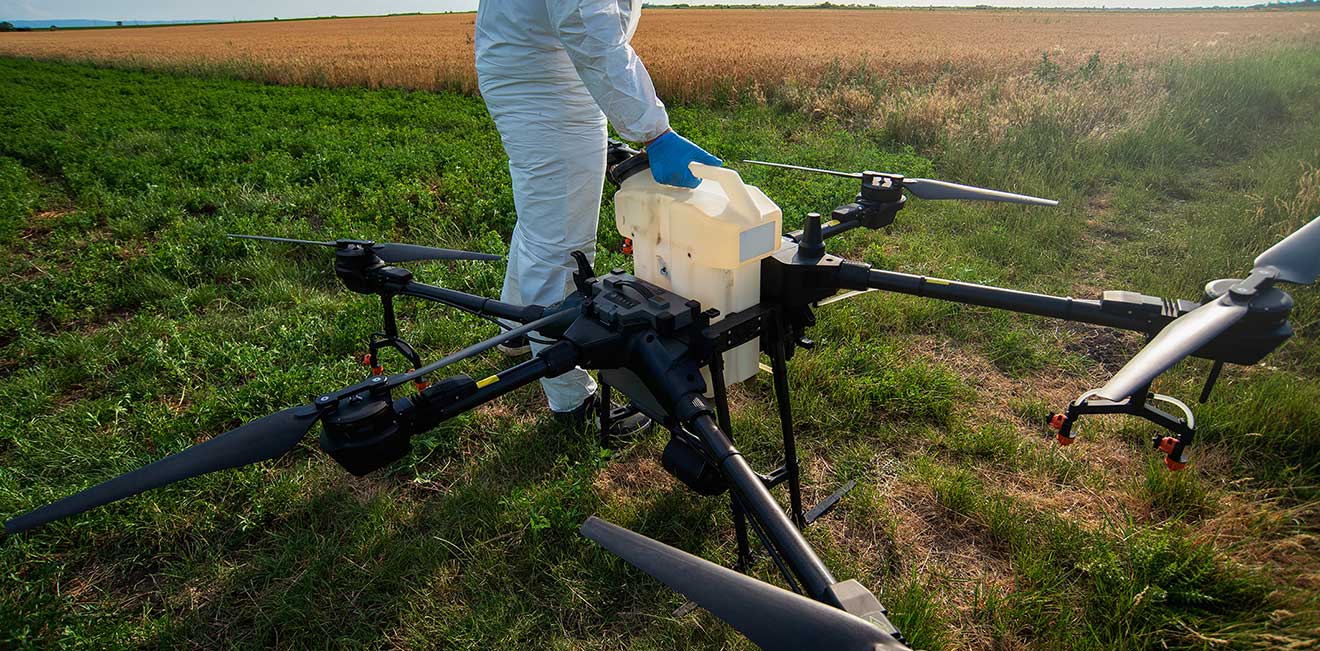
The Ministry of Agriculture's procurement of agricultural drones with spraying, seeding, and surveillance capabilities represents a game-changing tool for Jamaican farmers, particularly those working difficult terrain.
Drone Applications:
- Crop spraying: Drones cover hilly or hard-to-reach areas more efficiently than traditional methods, reducing labor costs and chemical exposure while improving coverage consistency
- Aerial seeding: Rapid deployment of seeds across large areas or challenging landscapes that would be impractical for manual planting
- Field mapping: Creating detailed topographical maps to identify drainage issues, soil variations, and optimal planting zones
- Livestock monitoring: Tracking cattle movement and health across extensive pastures
- Damage assessment: Quickly evaluating storm or pest damage to file insurance claims and plan recovery
Jamaica's Rural Agricultural Development Authority has already demonstrated these capabilities at farms across the island. As the technology becomes more accessible, even small acreage farmers can benefit through cooperative drone-sharing programs.
3. Hydroponics and Controlled Environment Agriculture
For an island nation facing land scarcity, water constraints, and climate volatility, hydroponics offers a revolutionary approach to food production. By growing crops without soil using nutrient-enriched water solutions, farmers bypass traditional limitations entirely.
Benefits for Jamaica:
- 90% less water usage compared to traditional farming—critical during increasingly frequent droughts
- Year-round production independent of seasonal rainfall patterns
- Higher yields per square foot, making the most of limited arable land
- Reduced pesticide dependency in controlled environments
- Urban farming potential turning underutilized spaces into productive growing areas
- Climate protection from hurricanes, floods, and extreme heat
The Food and Agriculture Organization has already implemented successful hydroponic training projects in St. Catherine, demonstrating viability for Jamaican conditions. With growing interest from youth entrepreneurs and urban farmers, hydroponics represents not just a farming technique but an economic opportunity that could attract a new generation to agriculture.
4. Smart Irrigation and Water Management
Water scarcity has become one of Jamaica's most pressing agricultural challenges. Farmers in areas like Mount Airy report that "the weather here's a lot drier for longer these days." Smart irrigation technology transforms water from a limiting factor into an optimized resource.
Water-Smart Solutions:
- Drip irrigation systems: Deliver water directly to plant roots, reducing evaporation and runoff by up to 60%
- Solar-powered pumping: Eliminate electricity costs while providing reliable water access to remote fields
- Rainwater harvesting: Capture and store rainfall during wet periods for use during drought
- Soil moisture sensors: Automated systems that irrigate only when and where needed
- Weather-responsive controllers: Irrigation schedules that adjust based on forecast and actual rainfall
The government's planned irrigation infrastructure investments—including the Lucky Hill Pen Project that will irrigate 400 hectares and boost crop productivity by 60%—demonstrate commitment to water management. Individual farmers can start smaller with affordable drip systems that pay for themselves through reduced water costs and increased yields.
5. Mobile Apps and Digital Farm Management
Smartphones have become powerful farm management tools, putting sophisticated capabilities in every farmer's pocket. Digital platforms now handle everything from crop planning to market connections.
Digital Tools Transforming Farming:
- Farm record-keeping apps: Track planting dates, inputs, yields, and expenses with automatic analysis and reporting
- Market linkage platforms: Direct connections between farmers and buyers, eliminating middlemen and increasing profits
- Weather and pest alerts: Real-time notifications about approaching storms, disease outbreaks, or ideal harvest windows
- Extension service access: Virtual consultations with agricultural experts and instant access to best practice guides
- Input suppliers: Order seeds, fertilizers, and equipment directly through apps with delivery tracking
- Financial management: Simplified loan applications and digital payments reducing transaction costs
With RADA having registered over 200,000 farmers, digital platforms create networks where knowledge sharing, bulk purchasing cooperatives, and peer support flourish. Technology becomes the bridge connecting isolated small farmers to resources and markets previously accessible only to large operations.
6. Climate-Smart Technologies and Practices
Climate change isn't a future threat for Jamaican farmers—it's a present reality demanding adaptive strategies. Climate-smart agriculture combines traditional knowledge with modern tools to build resilience.
Building Climate Resilience:
- Drought-resistant crop varieties: Seeds bred specifically for heat tolerance and low water requirements
- Agroforestry systems: Strategic tree planting that provides shade, prevents erosion, and creates microclimates
- Crop diversification: Planting multiple varieties and species to spread risk and improve soil health
- Shade houses and greenhouses: Protected environments that shield crops from extreme weather while extending growing seasons
- Carbon sequestration practices: Cover cropping and reduced tillage that capture carbon while improving soil fertility
- Early warning systems: Technology-enabled alerts for hurricanes, droughts, and pest outbreaks
Jamaica's shift toward organic farming and reduced chemical dependency aligns with global sustainability trends while improving soil health for long-term productivity. Climate-smart practices aren't just environmentally responsible—they're economically prudent insurance against increasingly volatile conditions.
7. Mechanization for Efficiency and Scale
While Jamaica has focused on high-tech solutions like drones, fundamental mechanization still offers tremendous productivity gains, particularly for small farmers working challenging terrain.
Practical Mechanization Advances:
- Walk-behind tractors: The government's investment in compact equipment perfect for small acreage and hillside farming
- Motorized soil augers: Specifically designed to support yam farmers in difficult landscapes
- Specialized harvesters: Onion-potato hybrid machines reducing labor requirements and post-harvest losses
- Field cable systems: Proven banana-industry technology applicable to coffee, yams, pineapples, and melons for easier transport with less labor
- Equipment-aided fruit harvesting: Safer, faster collection of coconuts, breadfruit, and ackee replacing dangerous manual methods
RADA's expanded tractor fleet—growing to 22 units with six more arriving in 2025—provides rental access to equipment too expensive for individual purchase. Shared mechanization through agro-parks and farmer cooperatives makes productivity tools affordable while building community capacity.
8. Value-Added Processing and Market Technologies
Growing food is only half the equation. Technology that preserves, processes, and markets crops transforms agriculture from subsistence to prosperity.
Post-Harvest Technologies:
- Solar drying systems: Extend shelf life of produce without electricity costs
- Cold storage facilities: Prevent spoilage and enable farmers to sell when prices peak rather than immediately post-harvest
- Small-scale processing equipment: Convert raw produce into value-added products like jams, spices, and packaged goods
- Packaging and labeling technology: Professional presentation that commands premium prices and meets export standards
- Traceability systems: Blockchain and QR codes providing farm-to-table transparency valued by international markets
- E-commerce platforms: Direct online sales to consumers, hotels, and restaurants
Municipal markets could serve as technology transfer hubs—offering shared packaging, weighing, and marketing services that level the playing field between small farmers and large exporters.
The Path to Adoption: Making Technology Accessible
Having technology available means nothing if farmers can't access or afford it. Successful adoption requires:
- Training and demonstration: Hands-on learning at model farms showing real results in Jamaican conditions
- Financing options: Equipment loans, lease-to-own programs, and subsidies making technology financially viable
- Technical support: Accessible extension services helping farmers troubleshoot and optimize new tools
- Cooperative purchasing: Farmer groups pooling resources to buy and share expensive equipment
- Youth engagement: Leveraging young people's tech-savvy to drive innovation and attract new talent to agriculture
- Policy incentives: Tax breaks, import duty reductions, and priority financing for sustainable technologies
A Sustainable, Prosperous Future
Jamaica's agricultural sector has the foundation—over a century of research, proven crop varieties, skilled farmers, and now significant government investment in modern equipment. What's needed is coordinated implementation that puts the right technologies in farmers' hands with the support systems to use them effectively.
The vision is clear: farms that produce more food with less water, withstand climate shocks, provide good livelihoods, and reduce the country's $1.4 billion import bill. Technology isn't replacing farmers—it's empowering them to compete globally while feeding Jamaica sustainably.
From satellite-guided precision to soil-free hydroponics, from AI-powered pest detection to solar-powered irrigation, the tools exist today to transform Jamaican agriculture. The question isn't about capability—it's about commitment to making future-ready farming the new normal across the island.
As Jamaica pursues its CARICOM 25 by 2025 goal of reducing regional food imports by 25%, agri-tech adoption isn't optional—it's essential. The farms that embrace these innovations won't just survive; they'll thrive, becoming models of sustainable productivity for the Caribbean and beyond.
What agricultural technologies are you most interested in adopting on your farm? Share your experiences and questions in the comments below.